

Panoramic Glazing: Features, Systems, and Glass Unit Options
A beautiful view from an apartment or house is one of the main advantages of panoramic glazing. Floor-to-ceiling windows are suitable not only for high-rise buildings, but also for private houses, cottages, terraces, and country homes.
Panoramic glazing visually expands the space, brings more daylight into the room, and gives the building a modern architectural look.
What Is Panoramic Glazing?
Panoramic windows usually cover the entire height of the opening or a significant part of it. The strongest visual effect is achieved when the glazing area is large and the frame design is selected correctly for the building.
Many customers worry that large windows may lead to heat loss. In practice, modern profiles, energy-efficient glass units, and professional installation make panoramic glazing comfortable and reliable even for year-round use.
Types of Panoramic Glazing
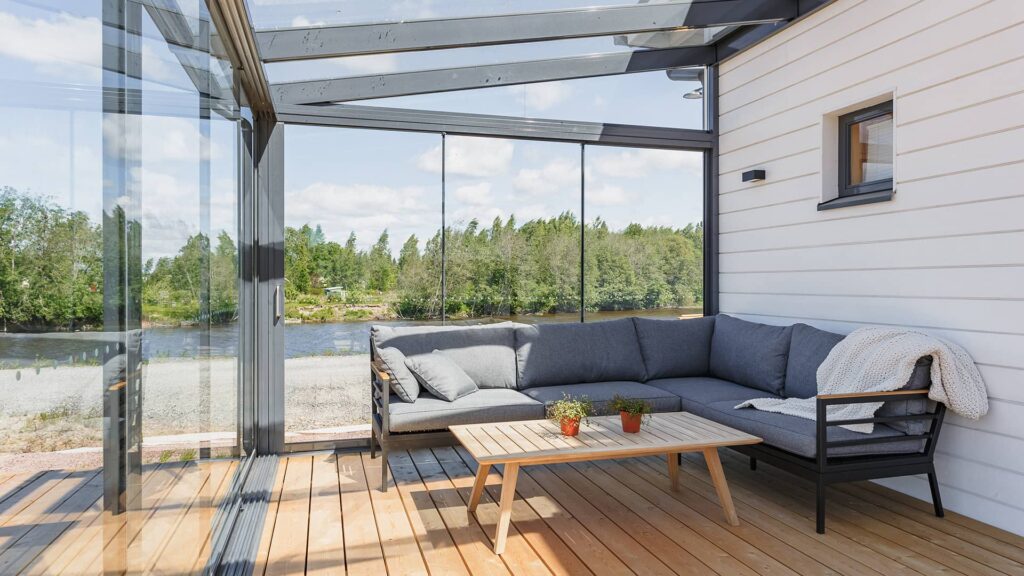
The choice of system depends on the purpose of the glazing, the room type, and the climate conditions. For balconies, loggias, verandas, and seasonal spaces, cold glazing can be used. It is usually based on aluminum systems and protects the area from dust, wind, and precipitation.
Frameless glazing creates the visual effect of a completely open view. Tempered glass panels are fixed in upper and lower profiles and can slide or fold, helping save space and keep the design light.
Warm panoramic glazing uses PVC or wooden frames and energy-efficient double-glazed units. This option is suitable for living rooms and other heated spaces where good thermal and sound insulation are important.
For additional comfort, glass can be tinted, reinforced with protective film, or treated with reflective coatings. Our specialists help choose the right system for your project and prepare a solution that balances design, safety, and energy efficiency.